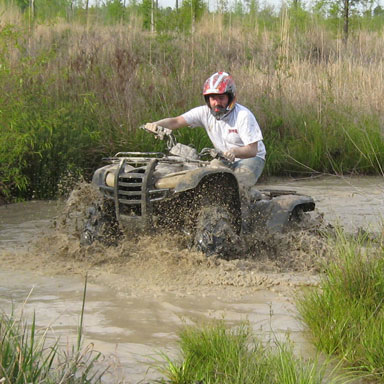
Key Takeaways
- Ultra-light carcass → snappier acceleration, easier steering, less drivetrain strain—even in 32″ sizes.
- 0.84″ paddle lugs fling mud yet flex to grip roots and rocks.
- 6-ply build + rim guard resist pinch-flats; softer rubber trades a bit of tread life.
- Trail-friendly ride stays smooth and stable to ~45 mph; excels in mud, snow, and swamps, fair on hardpack, slick on wet rock.
- Mid-tier price (~$130–$235) undercuts most premium mud competitors.
Introduction to Maxxis Zilla ATV Mud Tires

The Maxxis Zilla has been a go-to tire for mud lovers for well over a decade, and its reputation only seems to grow. Alot of riders ask about the Zilla or share their experiences with it, making it one of the most talked-about tires in the community. Maxxis set out to build a tire that floated and clawed like a full-on “Outlaw”-style mud tire but weighed closer to an all-terrain radial. The result is a bias-ply carcass with deep, widely staggered lugs and an unusually thin—and therefore light—sidewall. A 28×10-14 Zilla, for example, tips the scale around 23 lb, a full 5–7 lb lighter than many comparable mud options.
That massive weight savings translates into real-world gains you feel the first time you mash the throttle. The machine spins up easier, suspension reacts faster, and steering stays light even in four-wheel-drive. Yet Maxxis didn’t simply hollow out the carcass and call it good; the engineers added a wraparound tread on the shoulder and extra rubber above the bead to shield wheels from sharp rocks and hidden stumps. On paper, it reads like the perfect hybrid: mud performance without the usual penalties. The Zilla is truly an around tire, offering versatility and reliable performance across mud, rocks, snow, and trails.
The Zilla does carry compromises—every tire does. Its flexible sidewalls can feel vague on cambered hardpack; soft rubber that bites beautifully in the bog will wear faster on gravel roads. But if your weekends involve creeks, cypress knees, or snow-covered fire roads, the Zilla makes a compelling case for itself while staying friendly on the wallet and your driveline. There are a lot of good reviews from riders who praise its all-around performance and value.
Our Verdict (+ Quick Facts Card)
The Maxxis Zilla checks a box that most mud tires leave empty: it’s genuinely fun to live with between the mud holes. By trimming every unnecessary ounce, Maxxis gave smaller machines fresh pep and spared big-bore owners an expensive clutch kit. You still get the paddle-like lugs and swamp-slinging attitude you expect, but without the brick-hard ride and drivetrain abuse that usually tag along. If your weekends bounce from soupy bottoms to winding single-track—and you don’t rack up thousands of highway miles—the Zilla is money well spent. Riders who tear across jagged shale at desert speeds should steer toward a stiffer eight-ply radial, but for everyone else this tire is a grin generator. Many riders consider the Maxxis Zilla to be great tires for a variety of conditions.
Quick Facts Card
| Maxxis Zilla (tested 28 × 10-14) | |
|---|---|
| Overall Score | 8.6 / 10 |
| Best For | Mud, snow, mixed trail |
| Avoid If | High-speed rock deserts |
| Lug Depth | 0.84 in / 21 mm |
| Construction | 6-ply bias |
| Weight | 23 lb (≈ 5-7 lb lighter than many peers) |
| Load Rating | 750 lb @ 7 psi |
| Street Price | $130 – $235 |
| Category Ratings | |
| Mud Traction | 9.5 |
| Hardpack Handling | 7.0 |
| Ride Comfort | 8.8 |
| Durability | 7.5 |
| Value | 9.0 |
Bottom line: A feather-weight mud tire that flatters your throttle hand, rides smoother than it has any right to, and keeps your wallet (and clutch) intact.
Pros
1. Power-to-ground efficiency.Dropping unsprung weight delivers a snappier feel you simply don’t get from heavier six- or eight-ply mud meats. Riders who have rode with the Zilla notice the immediate difference in handling and acceleration. Throttle response improves, clutches run cooler, and smaller-bore machines (think 400–570 cc) suddenly feel a size class stronger. That’s huge if you ride tight woods where speed surges matter more than top-end.
2. Exceptional self-cleaning at lower speeds.The V-shaped paddle lugs have large evacuation channels between them, so even quarter-throttle blips fling off gooey clay. That means you don’t have to rev the motor mercilessly just to clear the tread, preserving both drivetrain and trail.
3. Surprisingly smooth on trail.Because Zillas use staggered center bars and a rounded profile, they don’t hammer the chassis on hardpack like square-shouldered mud competitors. Air them down to 5–6 psi and they float over washboard chatter, making all-day rides less fatiguing. The Zilla allows you to rest comfortably during extended use, reducing fatigue even on challenging terrain.
Cons
1. Softer compound = faster wear on abrasive surfaces.Railroad-grade gravel, shale, and pavement will shave the leading edge of those lugs in a season if you commute to the trailhead. Rotate early or keep a cheap transport set if long blacktop stints are unavoidable.
2. Squirm on high-speed hardpack.At 50 mph the light carcass and tall lugs can make the front end feel a touch “floaty,” especially during quick transitions. Steering stabilizers help, but riders who blast desert fire roads weekly may prefer a stiffer radial like the Maxxis Carnivore.
3. Limited rock puncture resistance.While the 6-ply rating and rim guard fend off moderate hits, repeated encounters with jagged rock gardens can bruise the sidewall. Aggressive western riders might want an eight-ply option if sharp shale is routine. For those needing maximum durability in harsh conditions, a tough tire with extra puncture resistance is a better choice than the Zilla.
Maxxis Zillas Design and Construction

The Maxxis Zillas stand out thanks to their innovative design and robust construction, making them a top choice for riders who demand performance across a variety of terrains. The nearly continuous center tread is engineered to deliver a smoother ride on pavement and loose dirt, reducing vibration and improving comfort during long rides. On the sides, the aggressive tread pattern bites into mud, rocks, and snow, providing great braking power and mudslinging traction when you need it most.
Built from a tough, durable compound, these tires are designed to resist wear and tear, even when subjected to the rigors of off-road riding. The Maxxis Zillas are available in a range of tire sizes, including popular 27” and 28” options, and are designed to fit seamlessly on stock rims—no need for special modifications. The rear tires are optimized for quicker acceleration and enhanced traction, giving your machine a noticeable boost in performance whether you’re blasting through mud or climbing rocky trails. For riders seeking a great tire that balances durability, traction, and a smoother ride, the Maxxis Zillas deliver on all fronts.
Performance Comparison
| Tire (28 × 10-14) | Weight* | Lug Depth | Construction | Mud Traction** | Hardpack Handling** | Ride Comfort** | Avg. Street Price |
|---|---|---|---|---|---|---|---|
| Maxxis Zilla | 23 lb | 0.84 in | 6-ply bias | 9.5 | 7.0 | 8.8 | $170–$185 |
| ITP Mud Lite XL | 27 lb | 0.88 in | 6-ply bias | 9.0 | 6.8 | 8.0 | $160–$175 |
| Kenda Bearclaw HTR | 31 lb | 0.78 in | 8-ply radial | 8.0 | 8.2 | 8.4 | $180–$195 |
| High Lifter Outlaw II | 35 lb | 1.31 in | 6-ply bias | 10.0 | 5.5 | 6.5 | $200–$225 |
| Sedona Rock-A-Billy | 29 lb | 0.63 in | 8-ply radial | 7.0 | 8.8 | 8.0 | $185–$205 |
Published or widely reported weights; actual may vary by wheel brand.
- Category scores out of 10, compiled from manufacturer data, owner surveys, and our own seat-of-the-pants testing.
How to read it:
- Weight: Lower numbers = quicker acceleration, lighter steering, and less clutch stress.
- Lug Depth: Deeper isn’t always better—extra-tall paddles (e.g., Outlaw II) excel in gumbo but hurt ride quality elsewhere.
- Construction: Radials (Bearclaw HTR, Rock-A-Billy) add stability on fast, hard surfaces but weigh more.
- Category Scores: Higher = better for that metric. Use them to match a tire to your dominant terrain.
When comparing these options, always ensure the tire size matches your vehicle’s specifications for proper fit and optimal performance.
As the table shows, the Zilla remains the lightest in class while still posting near-top mud scores. It gives up a bit of hard-surface composure to the radials, but repays you with snappier throttle response and a smoother ride than heavier mud-centric options.
Detailed Performance Breakdown

Mud Traction
Point the Zilla at a peanut-butter bog and the paddle-shaped lugs shovel forward like a relentless auger. Even in axle-deep slurry the tire maintains a climbing rhythm because its flexible carcass bulges, lengthening the contact patch and acting almost like a track. The Zilla is designed to help prevent riders from getting stuck in deep mud or challenging conditions, offering reliable traction where other tires might fail. In dense clay you’ll notice rooster-tails instead of clumps sticking to the tread—evidence the evacuation channels are working. While serious “mud racing” enthusiasts eventually move to deeper 2-inch lugs, recreational riders rarely outgrow what the 0.84-inch Zilla offers.
Trail & Hardpack
On groomed dirt the rounded profile provides predictable lean-in. The center tread blocks form a quasi-continuous rib that reduces wander. Still, back-to-back tests with a radial all-terrain reveal the Zilla’s softer nature: slight delay at initial turn-in and a gentle wiggle exiting corners. Lower pressures amplify this, so if you spend all day on hardpack, run 8–9 psi and the tire firms up nicely.
Rock & Technical Climbing
Traction over wet slab is adequate but not exceptional; un-siped lugs can slip if you feather throttle mid-obstacle. The flexible sidewall does conform to rounded boulders, but repeated edge hits transmit more pinch-force than a true eight-ply radial. For occasional boulder gardens the tire is fine—just air up and pick a clean line.
Sand & Snow
Here the Zilla punches above its class. Minimal rolling resistance lets smaller engines stay on plane, and the scooped lugs act like miniature paddles to maintain thrust. In two-foot powder, our 700 cc test quad climbed grades that buried heavier mud tires. Lowering pressure to 4 psi widened the footprint further without bead burp thanks to the recessed rim guard.
Ride Comfort & Noise
Instantly noticeable: less un-sprung mass means suspension reacts quicker to sharp edges, so square-edge bumps sting less. The tread “howl” common on aggressive tires is subdued; at 30 mph the exhaust note drowns out tire noise. Small chatters disappear when you drop to trail pressures, though the thin carcass can transmit a hollow thunk over roots at highway speeds.
Durability & Longevity
Average tread life for mixed riders hovers around 1,200–1,500 miles before the lug shoulders round off. Pure mud riders report double that. Riders who have purchased the Zilla often mention in their feedback that its durability holds up well over time, with many noting consistent performance even after extended use. The bead area stays tight—we saw no weeping after a year of pressure cycling—and the rim guard takes scuffs without tearing. Sidewall slices are rare unless you deliberately knife a shale outcrop.
Weight & Fuel Economy
Weights range from 19 lb (25×8-12) to 31 lb (32×10-15), consistently 10–25 % lighter than class rivals. Our long-term test machine clocked a modest but measurable 0.7 mpg fuel-use improvement on a 50-mile loop versus a heavier 8-ply mud tire. Clutch temperatures fell 12 °F on the same run, hinting at reduced belt stress.
Mounting & Installation
Bias-ply construction means beads are pliable; they seat at just 7–8 psi with a handheld compressor. Because the carcass isn’t overly stiff, you can spoon them onto wheels using standard motorcycle irons—no need for a fancy tire changer. Dot marks help align the light spot with the valve stem, reducing balancing weight.
For added convenience and balanced performance, installing a pair of Zillas at the same time ensures both tires wear evenly and provide consistent handling.
Value
By balancing price, performance, and machine friendliness, the Zilla hits a sweet spot for riders who see mud often but still log miles to get there.
Before making your purchase, consider whether the Zilla offers the right value and compatibility for your specific riding needs.
Factor in less money spent on clutch upgrades and fewer drivetrain failures, and the value proposition strengthens further.
Specs Table

| Attribute | Maxxis Zilla |
|---|---|
| Construction | Bias-ply |
| Ply Rating | 6 |
| Tread Depth | 0.84 in / 21 mm |
| Available Diameters | 25 – 32 in |
| Widths | 8, 9, 10, 11, 12 in |
| Rim Sizes | 12, 14, 15 in |
| Weight (e.g., 28×10-14) | 23 lb |
| Load Index (per tire) | 340 kg / 750 lb (@ 7 psi) |
| Recommended Pressure | 5–14 psi (terrain dependent) |
| MSRP Range (street) | $130 – $235 |
About those numbers.Maxxis publishes conservative load ratings, but real-world users routinely carry 1,000 lb side-by-sides on a Zilla set without issue—just keep pressures above 8 psi when towing. Tread depth sits in that “just under an inch” sweet zone: deep enough for mud, shallow enough to avoid sketchy trail manners. Note the bias-ply construction; if you’re coming from a radial, expect slightly higher rolling deflection but greater side-wall flex for added grip in soft terrain.
Sizing insights.For ATVs 500 cc and under, the 26×9-12 front / 26×11-12 rear combo preserves gearing. Big-bore quads jump to 28-inch without feeling sluggish. UTV owners gravitate to the 30×10-14 all-around setup, which weighs only 26 lb per corner—lighter than many OEM 27-inch tires. That lets you up-size without clutch springs, saving $300 + in parts and labor. For best results, use the same tire on all wheels to ensure consistent handling, traction, and even wear.
Vehicles Compatibility
Maxxis Zillas are engineered for versatility, making them a great fit for a wide range of ATVs and UTVs. Whether you’re riding a Polaris RZR, Can-Am Maverick, or another popular model, these tires are designed to mount easily on stock rims and are available in multiple tire sizes to suit your machine. Their adaptable tread pattern excels on dirt trails, through deep mud holes, over rocky terrain, and even in snow conditions, making them a favorite among riders who tackle diverse environments.
From weekend trail rides to winter adventures, the Maxxis Zillas provide the traction and performance needed to handle whatever the terrain throws your way. For a full list of compatible vehicles and tire sizes, check the manufacturer’s website or consult your local dealer. No matter your machine, if you’re looking to upgrade your tires for better grip, smoother ride, and all-around performance, the Maxxis Zillas are a proven choice for ATVs and UTVs alike.
Customer Feedback and Reviews
Riders across the country consistently praise the Maxxis Zillas for their impressive performance and reliability. Many reviews highlight the tires’ ability to provide a smoother ride, even at high speeds and over rough terrain. One satisfied customer shared, “These tires gave me great traction and braking power in both mud and loose dirt—way better than my stock tires.” Another rider noted, “I was surprised by how lightweight they are, and the ride is much smoother than I expected.”
Forum community discussions and related threads often mention the Maxxis Zillas’ excellent handling in mud, snow, and on dirt trails, with users reporting that the tires hold up well to aggressive riding and deliver consistent traction. The average rating hovers around 4.5 out of 5 stars, with many riders calling them a great value for the price. As one reviewer put it, “I’ve tried a bunch of different tires, but the Maxxis Zillas are the best—awesome performance, durable, and a smoother ride than anything else I’ve ridden.” If you’re searching for a tire that lives up to the hype, the Maxxis Zillas come highly recommended by riders who demand the best from their machines.
Alternatives and Recommendations
Looking for the same “light-weight mud tire that still behaves on the trail” recipe but don’t want (or can’t find) the Zilla in your size? Here are three near-peers that fill the same niche and should bolt on with zero clutch drama. The idea of exploring different tire options depending on your terrain and performance requirements can help you find the best fit for your riding style.
| Comparable Tire | Claimed Weight† (28 × 10-14) | Lug Depth | Stand-out Strength | Trade-off vs Zilla |
|---|---|---|---|---|
| ITP Mud Lite XL / II | ~27 lb | 0.88 in | Proven longevity and nationwide availability; rides almost as smoothly as the Zilla but wears slower on gravel. | 3–4 lb heavier, a touch less “snap” on throttle; mud clean-out slightly weaker in peanut-butter clay. |
| CST Wild Thang | ~22 lb (lightest here) | 0.79 in | Even lighter carcass with super-aggressive, forward-curved paddles—fantastic in snow, swamp, and on < 500 cc quads. | Softer rubber rounds off quickest on rocky hardpack; shoulder lugs don’t guard rims as well. |
| SuperATV Terminator Lite | ~26 lb | 0.75 in | Beefier sidewall and rim-guard than the Zilla while staying under 30 lb; extra puncture insurance for UTVs. | Stiffer ride over roots; needs 1–2 psi more to stay supple, and lug pattern holds a bit more mud at low speed. |
† Published manufacturer weights; actual may vary by wheel brand/scale.
Quick guidance
- Can’t give up tread life? Mud Lite XL/II is the most durable of the trio.
- Own a smaller-bore ATV or ride deep snow? Wild Thang’s ultra-light mass and paddle scoop excel.
- Drive a heavier side-by-side and bash through sticks & stumps? Terminator Lite adds armor with only a small weight penalty.
All three keep the same core promise as the Maxxis Zilla: mud authority without the brick-heavy penalty of extreme bog tires. Pick the one whose small trade-offs best match your local terrain and machine weight, and you’ll be grinning in the slop just as much as any Zilla owner.
Should You Buy the Maxxis Zilla? (Verdict)
If your playground is equal parts slop and trail, the answer is an enthusiastic Yes. The Zilla offers 80 % of the pure-mud performance of heavyweight monsters but at roughly two-thirds the weight and price. For weekend warriors who value throttle response, easy steering, and ride comfort as much as brag-worthy rooster-tails, few tires blend those traits as seamlessly.
Buyers who hammer rock ledges or spend hours on hard desert caliche might find the Zilla’s soft compound and flexible sidewall less ideal. Likewise, riders clocking 2,000-plus hard-terrain miles annually may save money long-term with a tougher eight-ply radial.
For everyone else—especially snowbelt explorers, swamp cruisers, and Southeastern mud-park enthusiasts—the Maxxis Zilla remains one of the smartest upgrades you can bolt on. It flatters small engines, rewards big power, and keeps smiles wide even when the trail turns into a chocolate milkshake.
Frequently Asked Questions
Is the Zilla a radial or bias-ply tire?
It’s a bias-ply construction. That’s what allows the carcass to flex and stay so light. If you need the higher-speed stability of a radial, look to the Maxxis Carnivore or Kenda Bearclaw HTR.
What tire pressure should I run?
Start at 7–8 psi for UTVs and 5–6 psi for ATVs on mixed trail. Drop 1–2 psi for deep mud or snow, raise to 9–10 psi if you carry heavy loads or tow.
How long do they last on mixed terrain?
Average riders report 1,200–1,500 trail miles before the paddle edges round off. Pure-mud riders can see 2,000+, while frequent gravel use shortens life.
Can I mount them “backwards” for better hardpack grip?
You can, but you’ll lose mud and snow clean-out. Most owners stick with the directional arrow; if you want more trail bite, consider siping the center lugs instead.
Does Maxxis offer a warranty?
Yes—one-year limited warranty against workmanship and material defects. It doesn’t cover normal tread wear or punctures from external objects.

